Manuscripts

A medieval manuscript is never merely a static text, it is an artifact. Behind bindings, margins, and faded inks lie centuries of human interaction (scribes correcting mistakes, scholars adding commentaries and books themselves journeying across borders as results of secularization or war (ex. Codex Gigas).

This part of our digital exhibition draws directly from our work with the historical collections of the Humboldt-Universität zu Berlin.

From a 12th-century Glossa Ordinaria carried off from Weissenau to Prague, Moscow and Berlin, to a monastic handbook assembled in the wrong order, these pages reveal the material, theological, and historical discontinuities that shaped the medieval written heritage.

Step into the Manuscript section to uncover scholarly treasures, decipher margin notes, and trace how fragmentary survivals continue to speak to us today.
Incipit tractatus super Leviticum Origenis

Universitätsbibliothek der Humboldt-Universität zu Berlin, Historische Sammlungen, Mittelalterliche Handschriften, Incipit tractatus super Leviticum Origenis, 1200. The treatise contains homelies of the Church Father Origenus.

Parchment- quires : 13 IV106 + 1f. (first quire starting at 3r) Kaisheim cistercian abbey - 251 by 171 mm.

Reisachiarum private collection (1809 - folio 1r) & Universitätsbibliothek der Humboldt-Universität zu Berlin (1892).

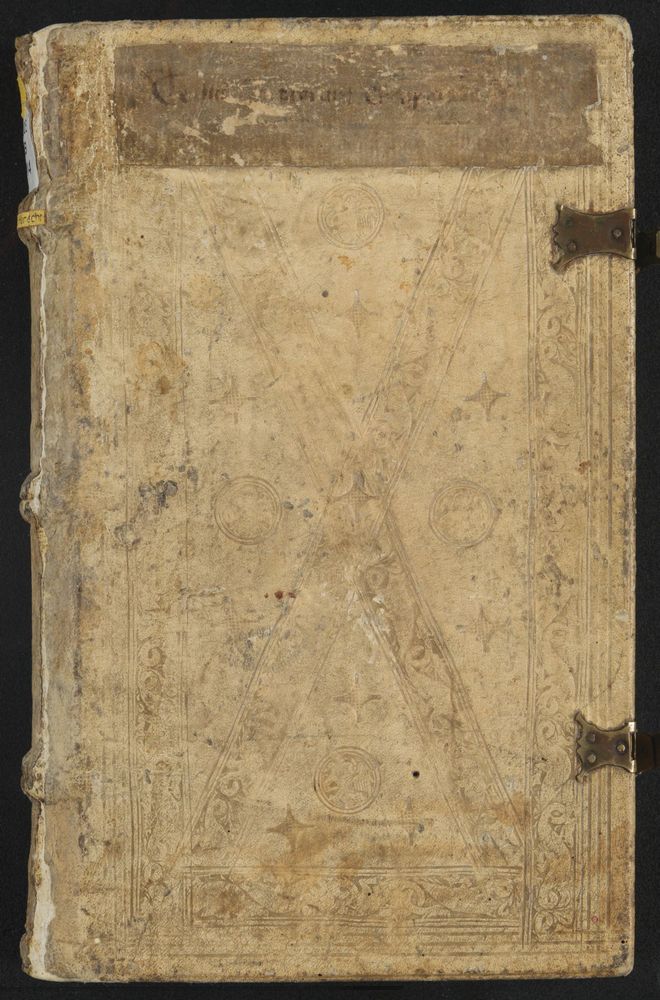
Well conserved binding, ca. 16th century, signs of worm holes - sheep or swine parchment - traces of metal decorations, intact metal clasps and traces of a chain on the lower board - signs of recent restoration (20th century).

Writing support is parchment + 2 sheets of blank paper (1 has an unidentified watermark) - regular quire collation - roman numerals.

1 column of 26 lines - justification of 2,9 * 1,3 mm (folio 26r) - litera textualis & cursiva with humanistic influence - at least 2 hands (original and commentaries from the 16th century).

© https://www.digi-hub.de/viewer/image/BV041155062/

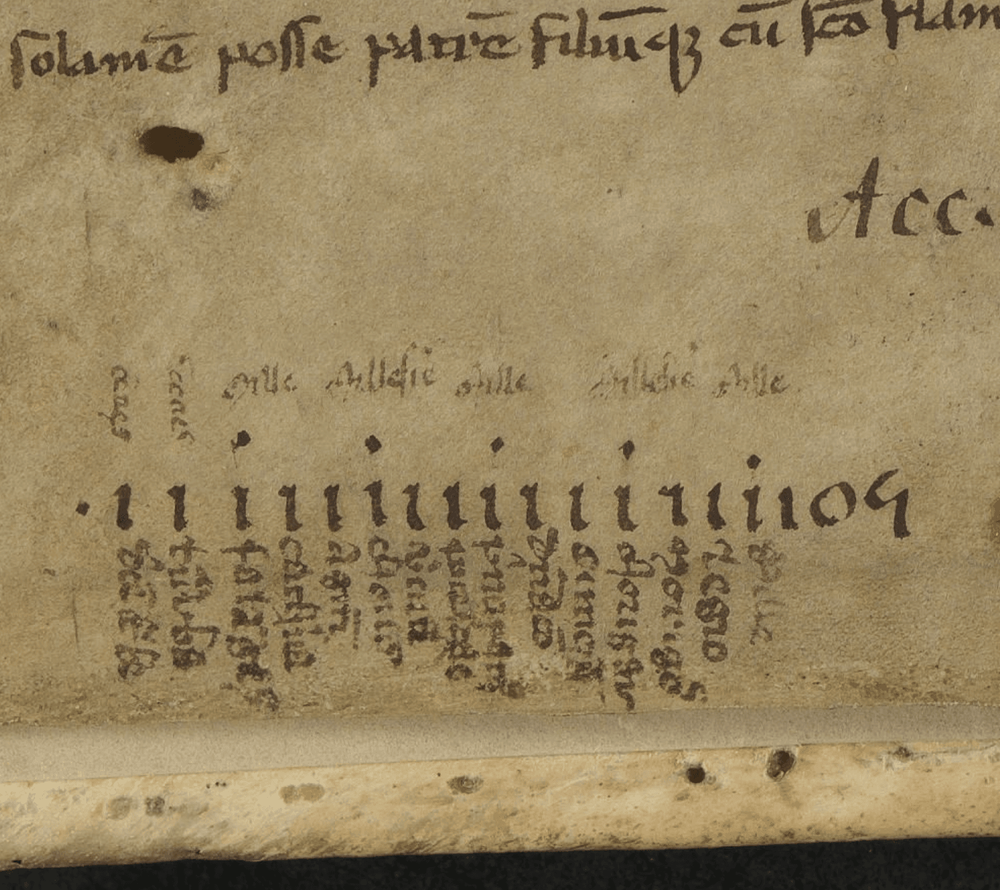
Drawing on the lower part of f.1v.

Institution: Universitätsbibliothek der Humboldt-Universität zu Berlin

Call Number: Hs. 2008 B 113

Glossa Ordinaria - Cantica Canticorum et Apocalipsis

Universitätsbibliothek der Humboldt-Universität zu Berlin, Historische Sammlungen, Mittelalterliche Handschriften.

Parchment,12th century, Weissenau (Southern Germany), Latin.

The text of the manuscript is Glossa ordinaria, Cantica canticorum et Apocalypsis with their prologues from the 12th century and additional texts on fol. 1, with 13th century glosses as well as some of the aditional texts and the prologue for Apocalipsis. The main text in annotated only till f. 23r, after that the glosses stop.

Quire collation: IV8 + IV15[bis] + IV23 + IV31 + IV39 + (II+1)44

The wood and pigskin binding is from the late 15th - early 16th century is decorated with floral ornaments and stamps executed in the technique of blindtooling.

This manuscript displays a specific type of layout : one column of main text in the middle with interlinear and marginal glosses (for both the cantica canticorum and the apocalipsis) and one last part with only one column of main text without any glosses (except one comment that looks like an erratum from the scribe).

Not decorated in itself, altough some places are left blank for that purpose (f.17, letter "A" of Apocalipsis meant to be illuminated).

The book was rebound in late 15th century, the binding is worn at the edges and cracked along the spine. There are several wormholes in the wooden boards. Some of the pages were cut on the outer edges during the rebinding, and one page between f. 15 and 16 was cut in half.

Script - late caroline minuscule, 6 hands

The pecularity of the manuscript is the fact that it is a work of multiple scribes from diferrent time periods throughout 12th and 13th century: the main text, prologus + glosses for Cantica canticorum and first 3 of the additional texts (f. 1r) from the 12th cent., and the last additional text as well as prologus and the glosses for Apocalypsis from the 13th.

Contents:

f. 1r:

1) Isidorus de Sevilla, Etymologiae, Gradus etatis sex sunt … expectant.

2) Hildebertus Cenomanensis, De mysterio missae, PL 1192D, Tollimur emedio … imago manet.

3) numbers description

4) Ivo Carnotensis, Decretum, Augustinus: Quatuor sunt genera oblationis… et angelis eius.

F. 1v: Praefatio for Canticum canticorum

ff. 2r-15v: Glossa ordinaria, Canticum canticorum.

Bis-f.16r: Prologus for Apocalypsis

ff. 16v-44r: Glossa ordinaria, Apocalypsis

This manuscript was first located in Weissenau abbey (Germany) in the 13th century, as written in f.1 : "Liber s(anctri) petri in Augia", where it ended up afted it was donated by Hartmannus, as the oldest 12th century provenance marking "Hartmannus tradidit" suggests. Then there is an early modern handwritten exlibris "Bibliothecae Weissenau", that suggests that it stayed in that abbey. In 1803, following the secularization of Weissenau, it was sold to Prince Lobkovitz. Therefore, it came to Prague before being dispersed through Europe all through the 19th century. During that time, it was bought by Theodore Martin Fund, librarian of the Royal library of Berlin (stamp of the library of the Friedrich Wihlem University, f.1) and it is officialy included in the University Library in 1881.

In the 20th century, it is taken away by the Soviet troops (stamp of the Moscow Academy of Science, f.45) and returned in 1958. This manuscript was rediscovered in the University Library in 1997.

Another theological manuscript, or rather three?
Binding

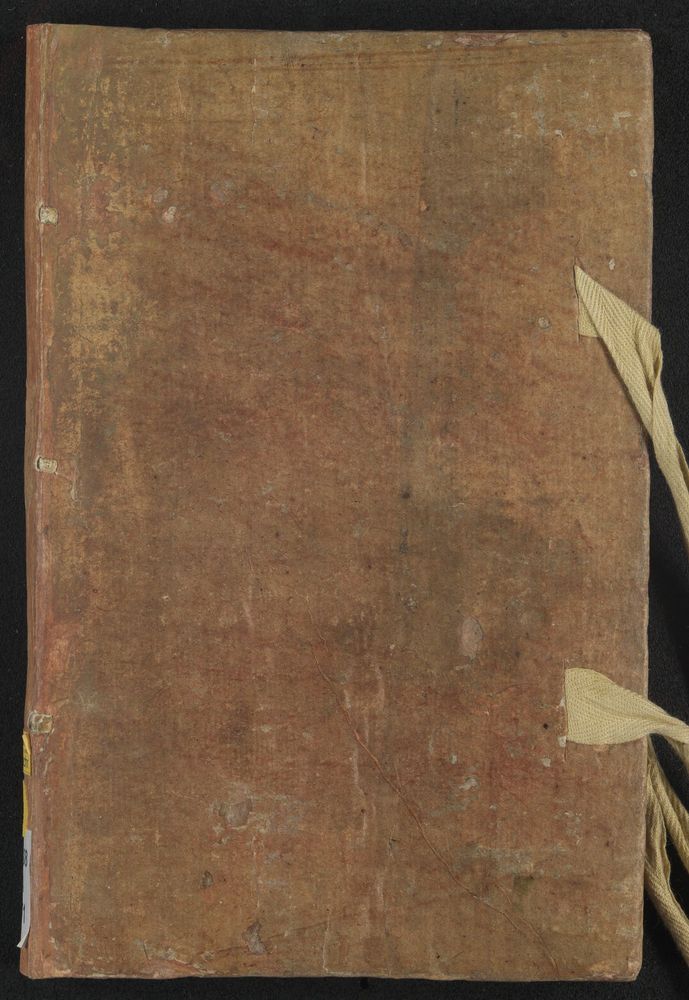
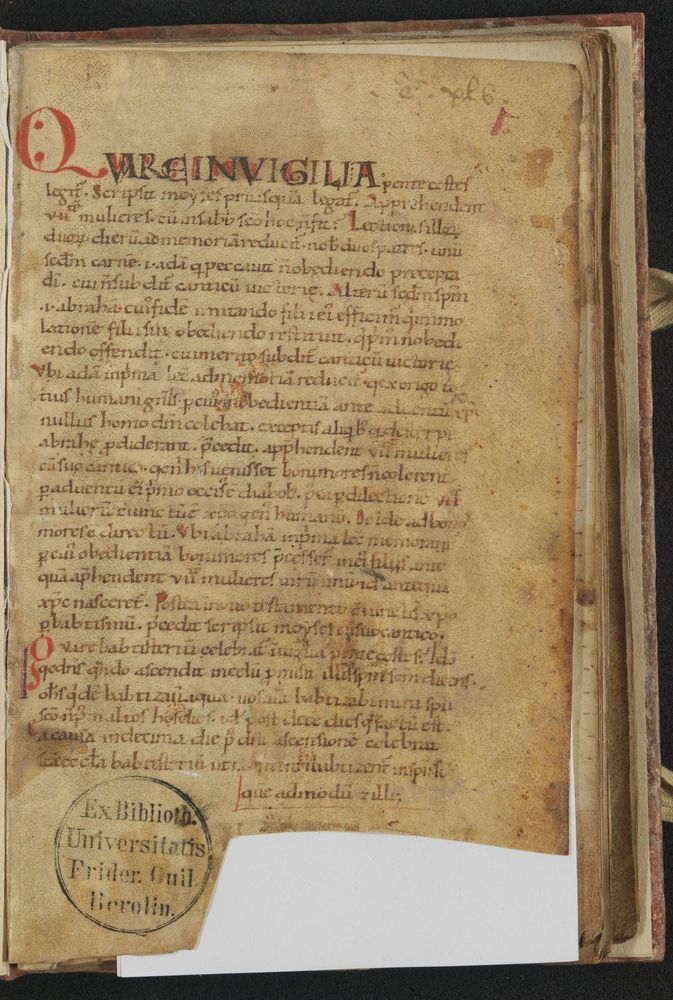
At the first glance, the manuscript bearing the shelfmark Hs. 2008 A 871 from the University Library of the Humboldt University, Berlin, does not do much to entice a potential reader to open its pages. It was rebound at some point, likely by a 19th century collector, into a very simple paper binding with two practical strings to keep it closed. Luckily, the saying "don't judge a book by its cover" very much applies here.

Liber Quare

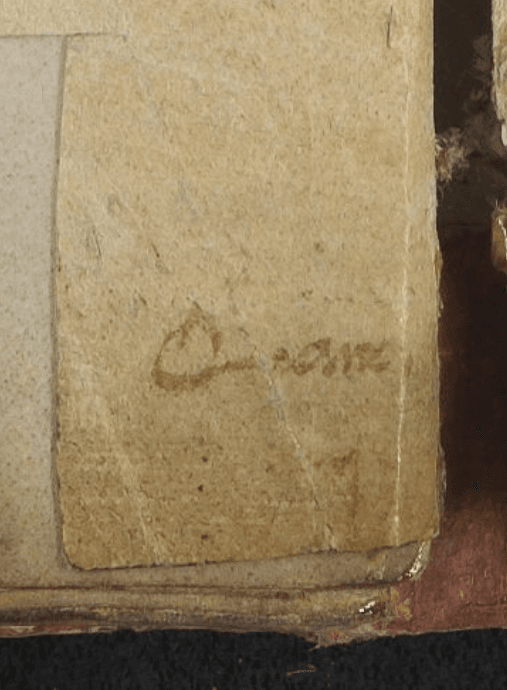
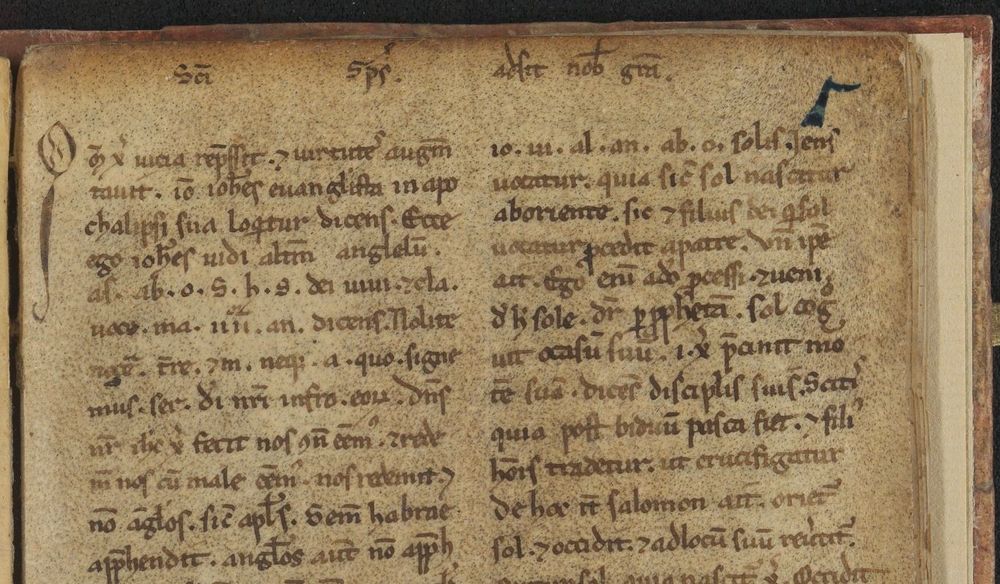
The binding hides a real gem, an 11th century manuscript written on parchment by the hand of a scribe whose strokes are reminiscent of the Carolingian times. It contains a copy of the Liber Quare, an 11th century liturgical "handbook" and a compilation of a more comprehensive volume by Amalaris. Sadly, we do not know which hands exchanged the manuscript before it reached Berlin, as the previous provenance marks are thoroughly cut out (see the bottom right section of the first folio).

Don't forget to put the quires in the right order!

Call number: Hs. 871

Second manuscript

A later owner decided to bind the manuscript of Liber Quare together with a younger and much less carefully copied manuscript of an unknown short (8. fol.) theological text, possibly a sermon. It was fitted with a separate foliation in blue ink.

Last but not least

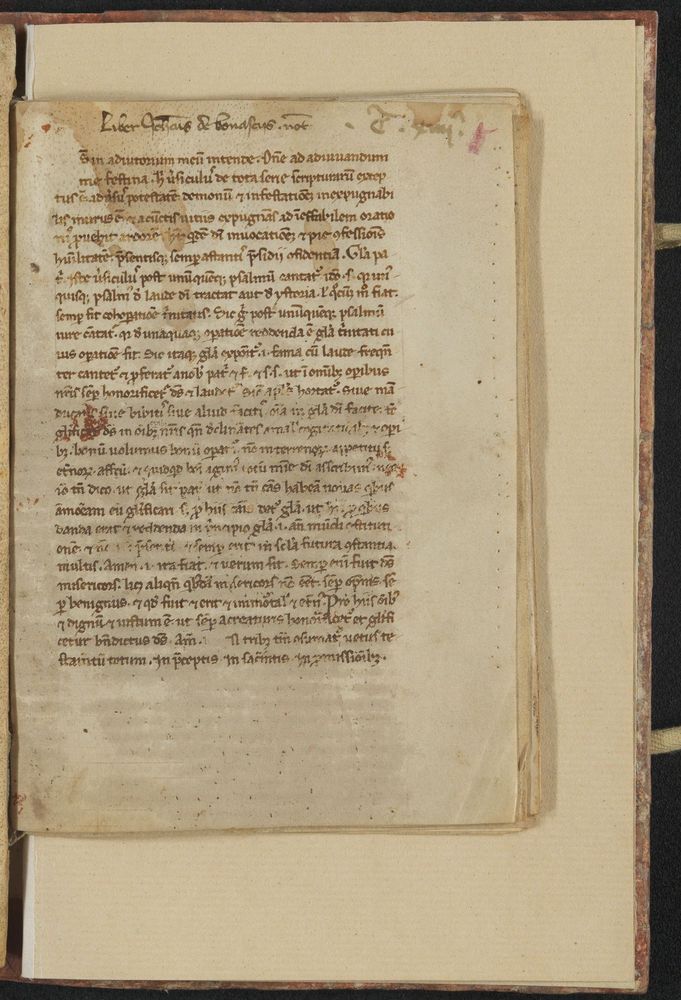
Two manuscripts in one codex weren't enough. While the relation of the first two texts, which could explain their physical proximity, remains unclear, the text of the third manuscript, a tiny booklet, is closely tied to that of the first. It is the appendix to Liber Quare, copied centuries after the first manuscript in our codex. Both the first and the third manuscript were foliated in red ink by the same scribal hand, at which point they also likely found their way to a single codex.