Charters - Witnesses of Communication
In this room, you can see an exhibition of different types of charters. They range from a letter about an election at a Cistercian abbey in Italy and the testament of a woman to records of taxation in the late medieval Empire.
What connects these objects is their simple appearance, practical use, and focus on the information they contain. However, even these charters can reveal interesting visual features, such as the notary’s sign or, in some cases, problematic dating.
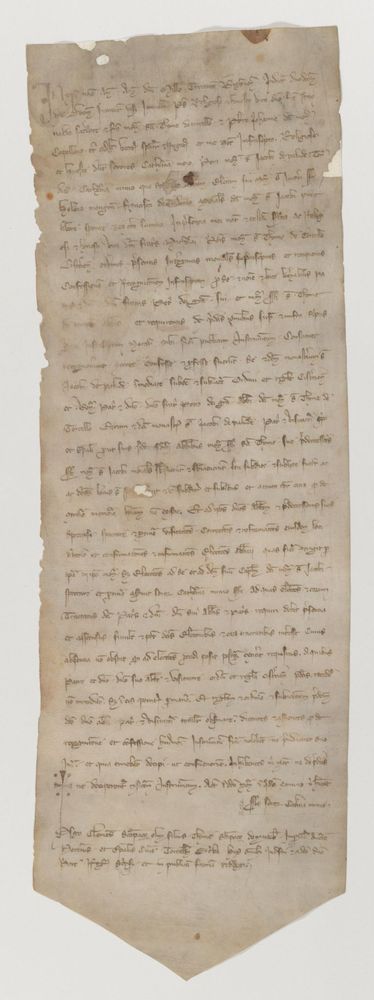
Elections at Cistrecian abbey
Date: January 10, 1330
Place: Italy
Material: Parchment
This charter, preserved in the University Library of the Humboldt-Universität zu Berlin (Urk. 268), is a letter about elections at cistrecian abbey in St. James di Palude to abbey in St. Thomas in Torcello. Caterina Minio and the convent of the monastery of St. James di Palude confirm that they submit to the Cistercian Rule and to Abbot Petrus of St. Thomas in Torcello. Abbot Petrus assumes responsibility for the visitation of the monastery; he must be present at the election of a new prioress and give his consent to it.
https://www.digi-hub.de/viewer/image/BV046216670/25/
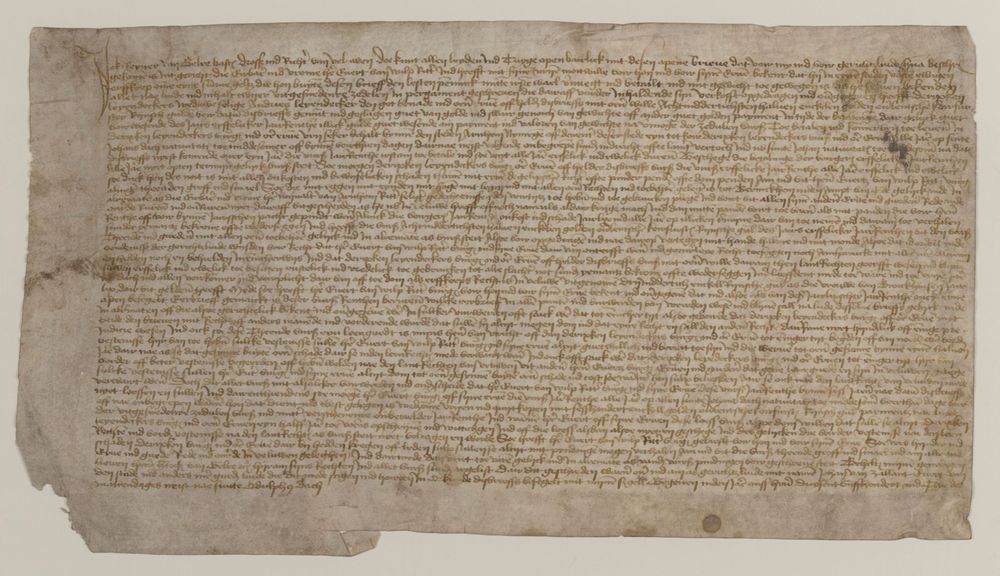
Dutch, Low German or something in between? A newly discovered charter from 1500
Date: June 8, 1500
Place: Dutchy of Guelders
Language: Middle Dutch (with possible influences of Middle Low German and Frisian)
Material: Parchment
This charter bears witness of a financial settlement between Barbara, supported by the knight Guert van Wilp, and the heirs of late Andree Leyendecker. The charter was issued by Reiner van Gelre (of Guelders), son of Duke Adolph of Guelders Egmond and lord of Grunsfoort op de Veluwe. While we can clearly date the charter it does not provide a place of origin. Localities mentioned in the narratio and intitulatio, however, place it in the Duchy of Guelders.
When first found, the language of the charter was not clearly identified. Linguistic analysis shows it was written in late Middle Dutch but shows influences from neighbouring varieties.
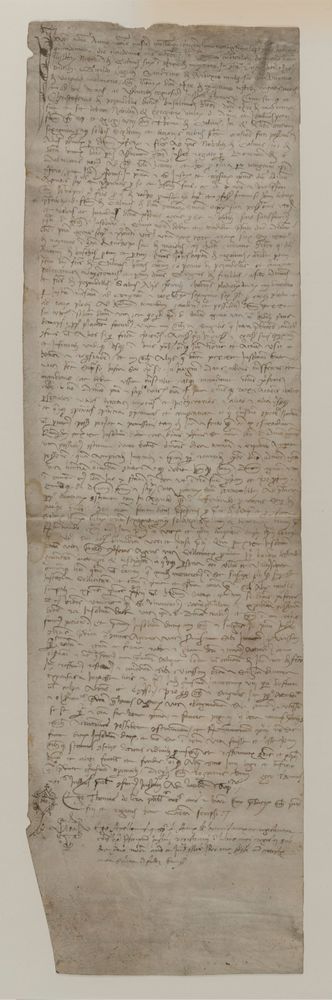
Notarial act from the notary Thomas de Lera, for the residence of the Calini family in Mairano
Date : 1497
Place : Brescia
Material : Parchment
Language : Latin
This very long charter is a notarial deed from Brescia by the notary Thomas de Lera, for the residence of the Calini family in Mairano, written in 1497. The charter contains the differents conditions of the residence's deed of ownership.
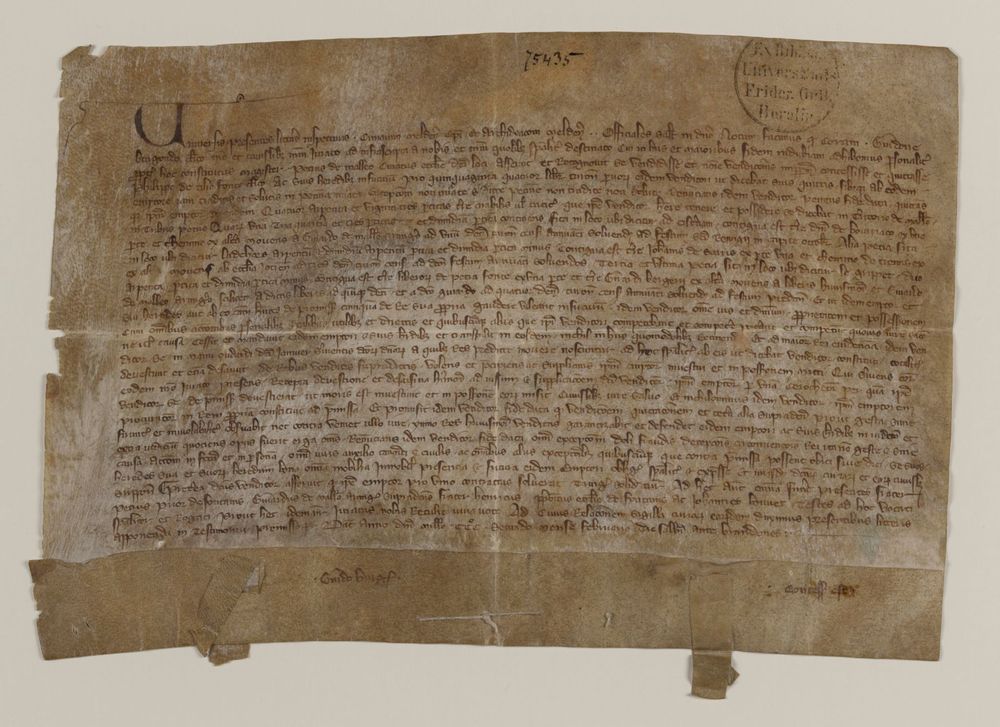
The struggles of dating a charter
Date : 23 february 1303
Place : Meaux, France
Material : Parchment
Language : Latin
A charter confirming a land transaction by a vicar of the bishop of Meaux preserved in the University Library of the Humboldt-Universität zu Berlin (Urk. 273) illustrates some of the struggles historians may encounter when attempting to date a medieval charter. If you take a closer look at the last line of the charter, you can easily make out the Latin: Datum Anno domini millesimo CCCo secundo mense februario die sabbati ante brandones. So clearly, the charter was issued in february 1302, on the Saturday before the feast of "Brandons", right? Wrong! A look into the chronological tables provides a warning. Brandons (the first Sunday of Lent) is a movable feast and in 1302 it falls on March 10th – which is not in February. Luckily, there is a solution. An aspiring medieavalist needs to know that for some chancelleries in medieval France a new year would only start on Easter. As our charter was issued in February, we need to correct the year stated in the text to 1303. In 1303, the Saturday before Brandons corresponds to February 23th. Voilà, now we have the correct date.
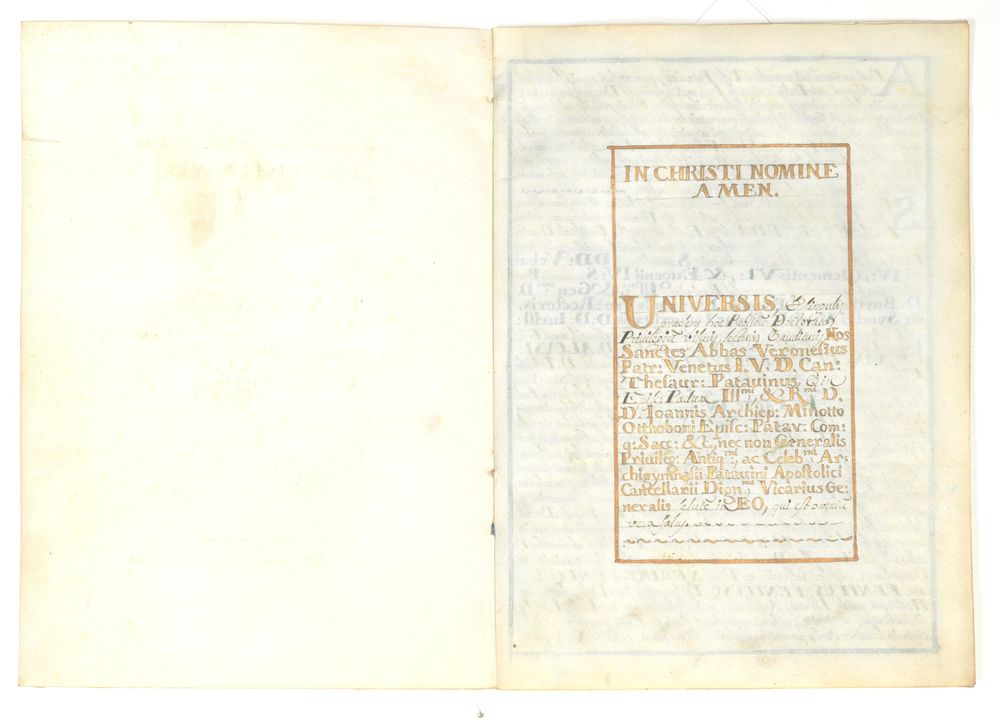
A scholar's pride, then as well as now: the doctoral diploma of Aloysius Sanctes Fedrizzi
Date: May 5, 1738
Place: Padua, Italy
Material: Parchment
Language: Latin
This beautiful charter comes - uniquely in this exhibition! - in the shape of a codex.
It is the formal doctoral diploma granted to Aloysius Sanctes Fedrizzi, a priest in Venice.
Contrary to a lot of the other charters shown in this exhibition, it is rather "recent", having been written during the first half of the 18th century in the Bishop's palace.
In it, the general vicar Sanctes Veronesius confers the title of Doctor of Both Laws to Aloysius (Canonic and Roman Law), acting under the authority granted to him by Archbishop Johannes Minotto Otthoboni of Padua, grants the priest his title, after a thorough examinations administered by the College of Doctors of Law at the University. If one has had to present a thesis themselves, this process should sound familiar!
Spend some time admiring the careful humanitarian script of Julius Modelli, scribe under the watch of Ioseph Frascio, notary of the archbishop of Padua. You can also admire the beautiful gold ink highlights parts of the text. By the way, if this handwriting feels relatively easy to read, it is because it inspired our current way of writing!
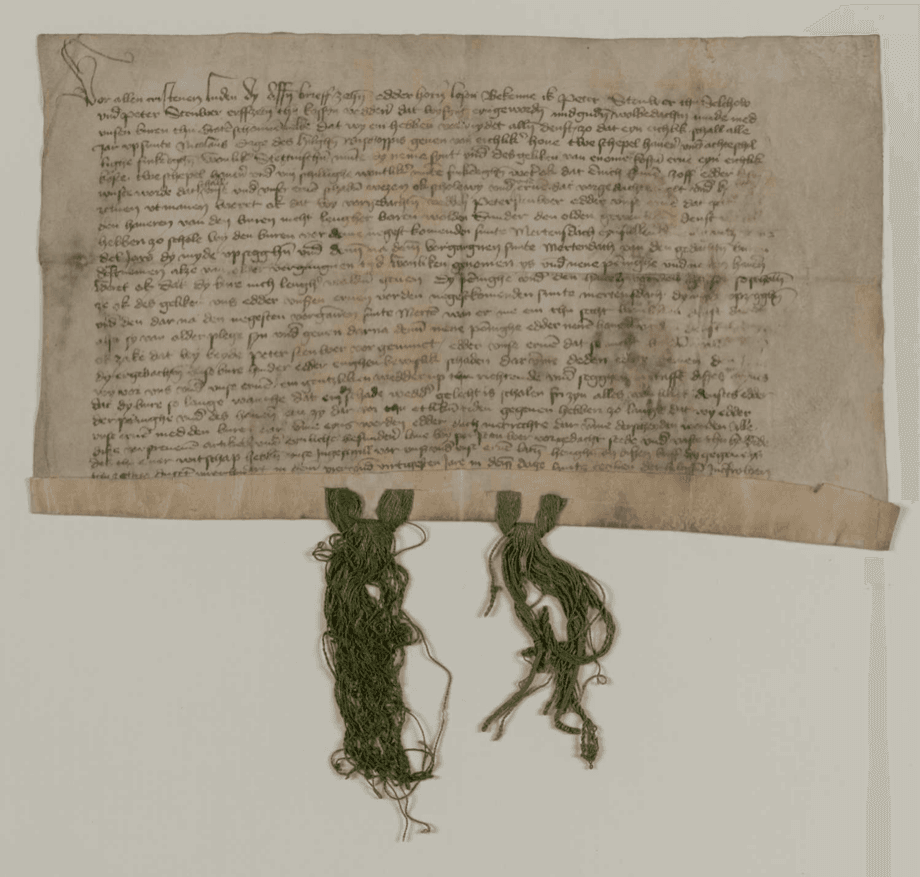
Charta concerning taxation
Date: September 22, 1444
Place: Northeastern HRE, probably Stettin area
Material: Parchment
Language: Middle Low German
This charter comes from the collection of the University Library of the Humboldt-Universität zu Berlin (Urk. 274). It is authored by Peter Stenwer of Selchow and Peter Stenwer of Kosslyn, whose seals might've been attached to the two strings that are still connected to the bottom part of the parchment. The document claims that both Peters have agreed with their tenants to replace their traditional labour charge with an annual payment. This payment may be made in natural goods and/or money, depending on the size of the tenants land. It is to be collected on St. Nicolas Day (6th of December). In a difficult to read passage there might be included a clause for the tenant to revoke this change by St. Martins day (11th of November) of the respective next year. The document closes with a dating of the "forty-fourth year" on St. Cecilias Day. Based on the script used this is the 22nd of September 1444 which accords with an 18th century archival note on the backside.
The mentioned holdings of the von Steinwehr family were still in family possession by the 17th century and may be identified with farmsteads in modern-day Pyrzyce and Gryfno. Either one of the authors may be identified with the Peter Steinwehr from a 1435 charter in the same region. That charter makes the first mention of this branch of the family which settled in Farther Pommerania.
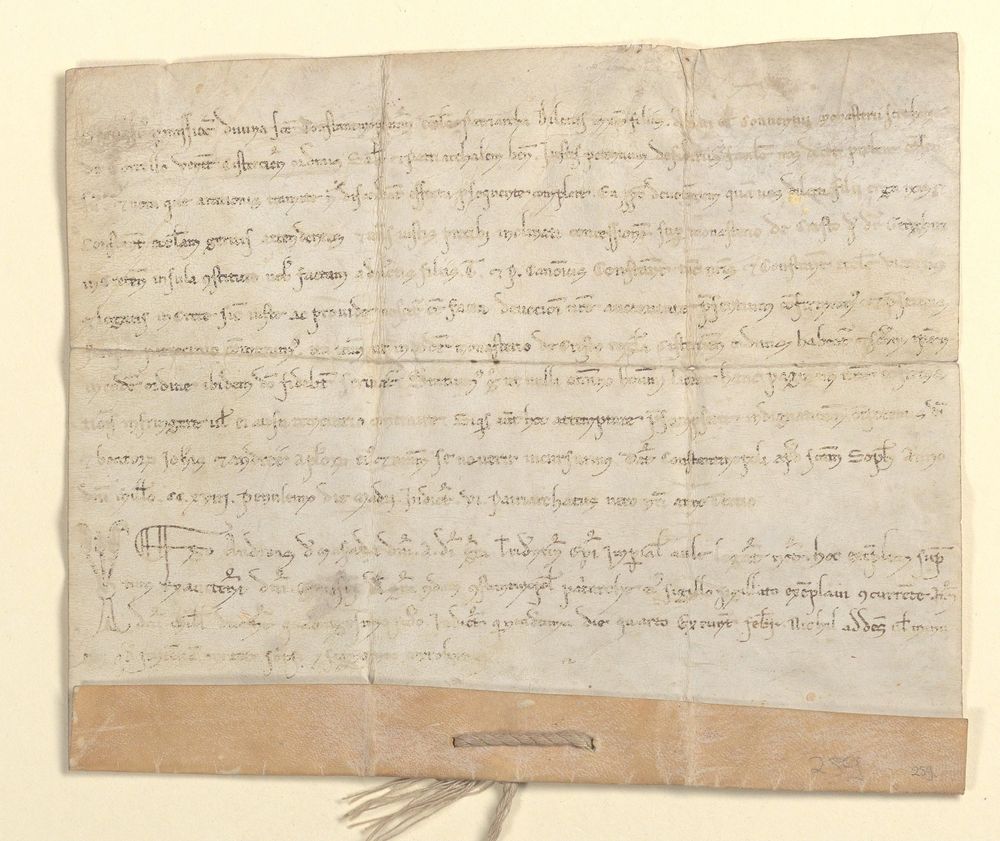
Transfer of a monastery on Crete
Date: 30 of May, 1218
Place: Constantinopole
Material: Parchment
Language: Latin
This charter, preserved in the University Library of the Humboldt-Universität zu Berlin (shelfmark Urk. 259), is a notarized copy of a document of Patriarch Gervasius of Constantinople confirming the transfer of the Monastery of Gerghiri on Crete to the Monastery of St. Thomas in Torcello. The charter is now in a poor state of preservation and is hard to read because of the damage. The hemp thread on it also indicates that the document had a pending seal, that is now lost.
https://www.monasterium.net/mom/HUBerlin/259/charter?q=Urk.%20259#d2e110
https://www.digi-hub.de/viewer/image/1605878059459/1/#topDocAnchor
An Italian woman's will
Date: February 3, 1501
Place: Venice, Italy.
Material: parchment
Language: Latin
This charter, preserved in the University Library of the Humboldt-Universität zu Berlin (Urk. 171), is the testament of Elisabetta, widow of Pietro Manolo. In it, the testatrix names as her heir her daughter Angela, wife of Giovanni Antonio de Rompiase, and promises her a bequest of 300 ducats. The will was drawn up by the notary Bernardino Bono and witnessed by Demetrio, son of Antonio, aromatarius (spice-seller), and Stefano, son of Giovanni, remario (oar-maker). The document offers insight into the transmission of property along the female line, as a widow provided for her married daughter through a substantial monetary legacy.