(Dis)Continuities in texts and margins
Medieval manuscripts and fragments feature endlessly fascinating structures. The Humboldt Universität collection allows us a look into how manuscripts were made and built: different hands and texts are conjoined in the same manuscripts, marginalia give indications about the content of copied texts and embellish these objects. We even encounter mistakes and corrections, highlighting the discontinuities in the making of manuscripts throughout the Middle Ages.
STRUCTURES
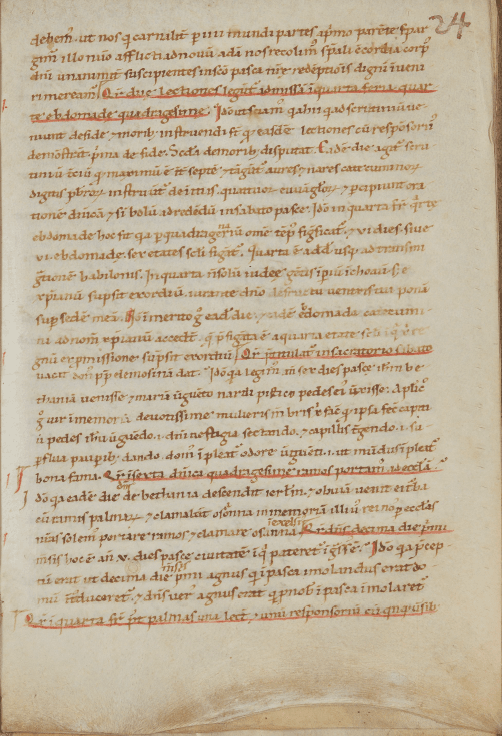
In this other folio of Liber Quare, the beginning of each question is underlined in red. A mark in the margin indicates the new question.
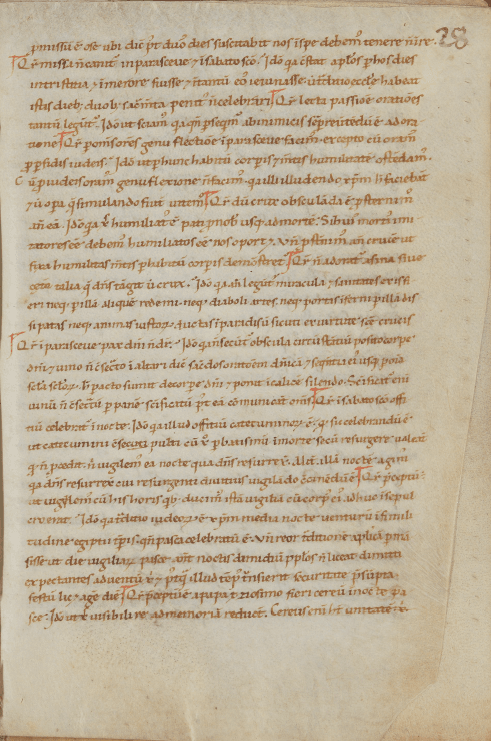
In this third folio of the Liber Quare, a red mark in the text indicates the new question.
MARGINALIA
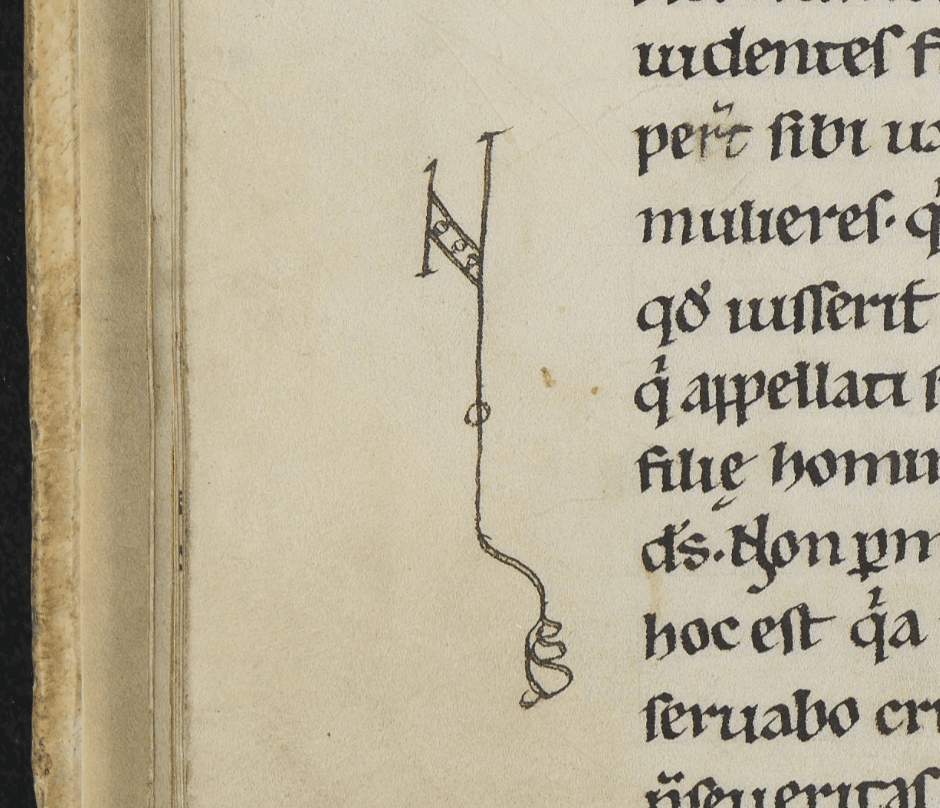
Marginalia - Nota Bene
In Ms. 2008 B 113, marginal comments appear throughout the manuscript. The most frequent form they take is that of a stylised "N", used to signify "nota bene". This was a conventional sign, used in order to point out a part of the text deemed particularly significant either by the scribe, by a later reader, or indicated in the version of the text used as a model to copy out this Bible commentary.
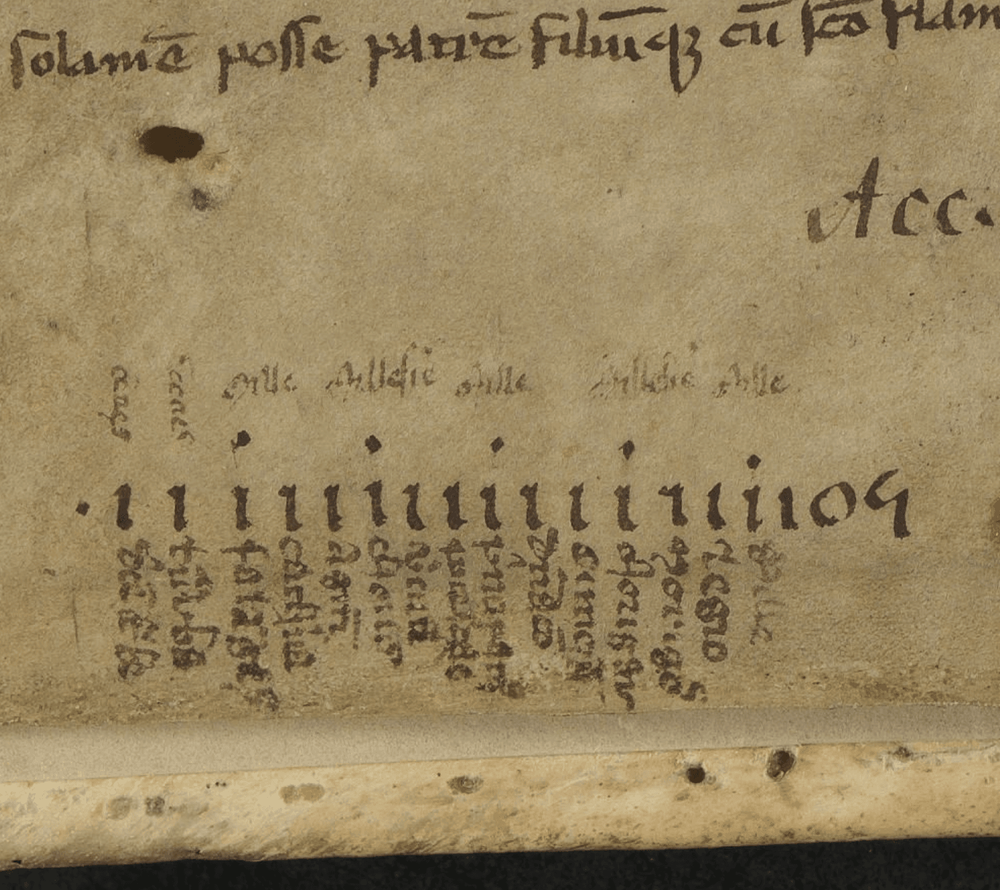
Mapping out the armies of heaven
Another marginal annotation, much more unusual, is the drawing of the armies of heaven on f. 1v., which illustrates the text enumertaing the armies of heaven at the top of the same page. This part of the manuscript was written during the 13th century, while most of the writing, including that of f.2r. to f.107r., indicates a 12th century origin. Here, margins and empty spaces were filled in on the first and last folio by a 13th century hand, which also added two hymns – one of them to the Holy Cross, the other one to Saint Catherine – and sermon texts.
Tracing manuscript histories
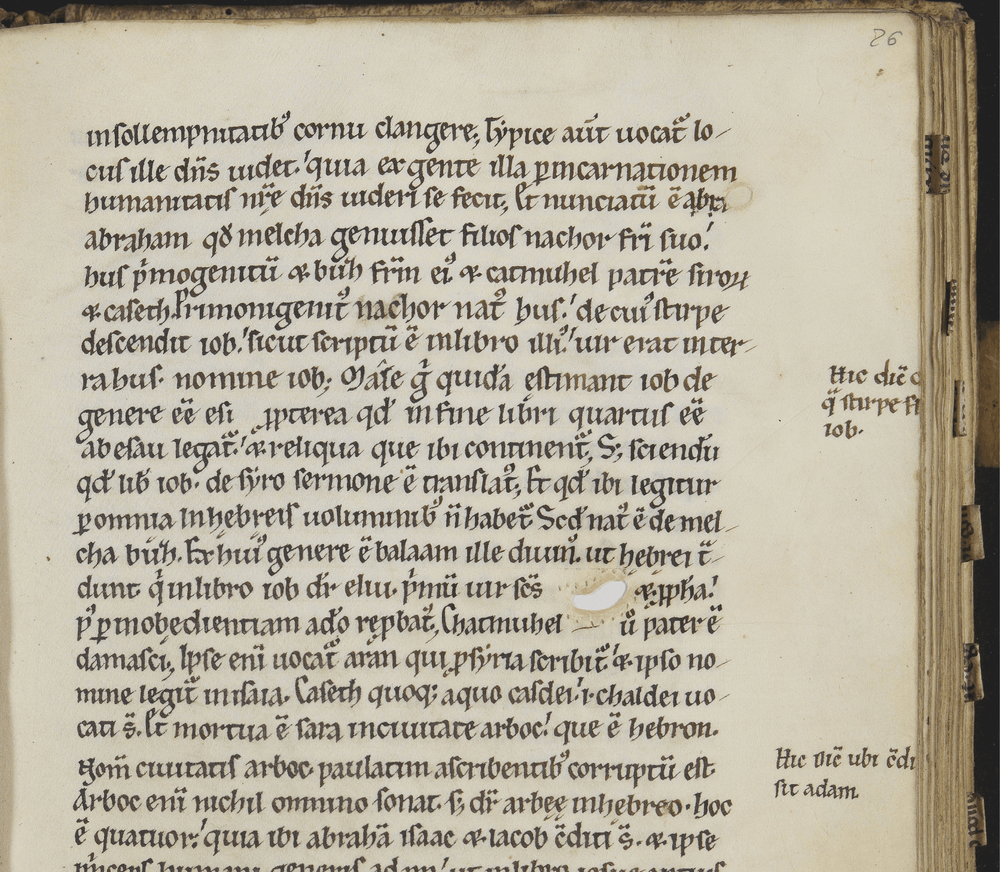
Some marginal indications give us more information on the use and history of the manuscript. In the margins of Ms. 2008 B 113, titles indicated the different parts of each chapter of the Bible, at least at the beginning of the manuscript. Some of these marginal titles are cut off, indicating that the manuscript was recut in order to fit into a new binding, at least once. It also indicates that the manuscript was recut before adding the placeholders (discussed in the "Fragments" section of the exhibition).
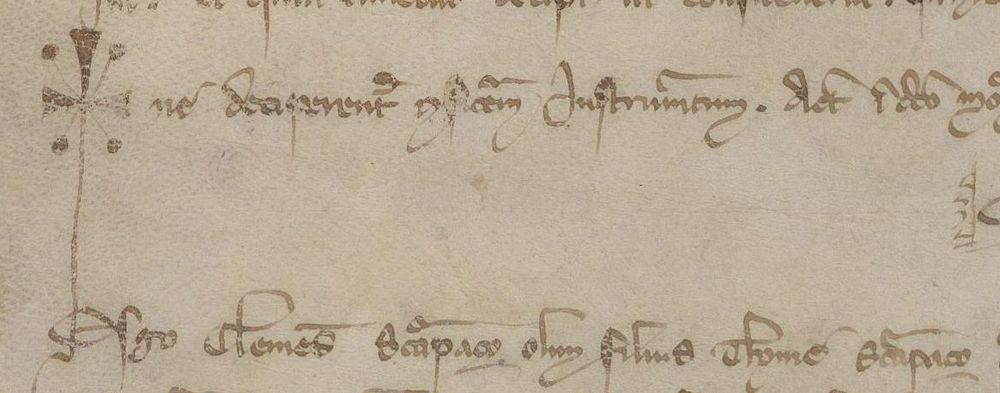
Signing margins - notaries in action
MISTAKES AND CORRECTIONS
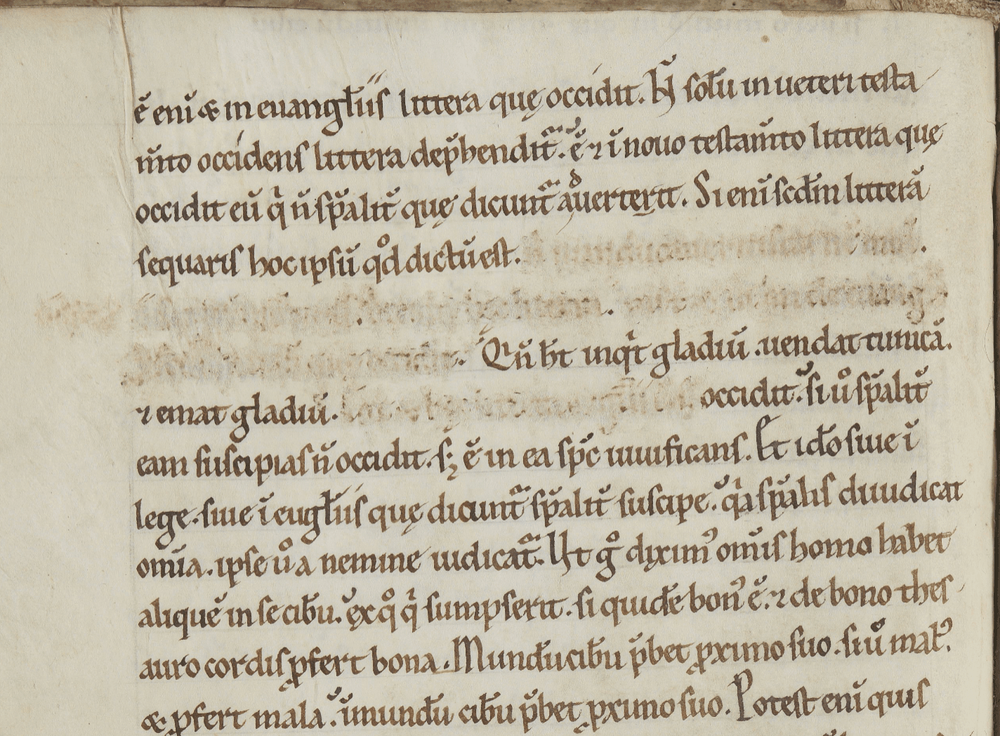
Inciput tractatus super Leviticum Origenis
Missing script :
"’Nisi mandueaveritis carnem meam, et biberitis sanguinem meum,’ occidit haec littera. Vis tibi et aliam de Evangelio proferam litteram, quae occidit"
"Ecce et haec littera Evangelii est, sed"
This erasure may have been due to the text being controversial from a Christian theological point of view.
A quire mistake?
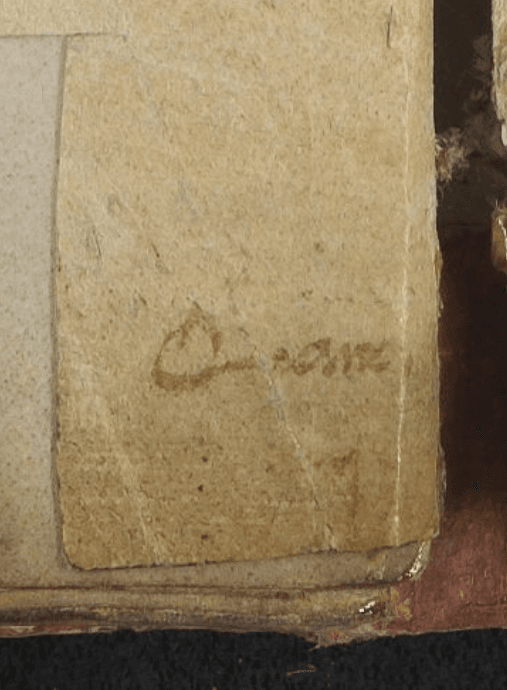
We know that the scribe followed the structure of the original work very closely in Hs. 871 and copied the hundreds of "quaestios" making up the Liber Quare in the same order. Funnily enough, the scriptorium producing our copy seems to have made a mistake when assembling the five quires making up the manuscript. Quires 1 and 2 ended up bound only after quires 3-5, as we can tell from the fact that the text starts with questions no. 106-253 and only after fol. 23r do we reach questions 1-105. It probably didn't help that the catchword (showing the beginning of the next page so that the quires weren't missaligned...) at the end of what was intended to be quire 5 reads "quare". Quare is the word at the beginning of nearly all of the quaestios.
The Liber Quare serves both as a reference work and as a handbook of catholic liturgical matters. It is structured as a series of questions, each beginning with Quare or Quaerendum est, thereby enabling the reader to identify readily the subject under discussion. It does not, however, contain any chapters. The various markers that structure the text therefore provide the reader with the only means of navigating the 253 questions that make up the Liber Quare.
In this folio, the division of the text in questions is significated by rubricated "Q" at the beginning of each question.
How to divide parts of a text
Hs. 2008 A 871 f. 4r
How to divide parts of a text 1